Take the common item when it solves a problem now
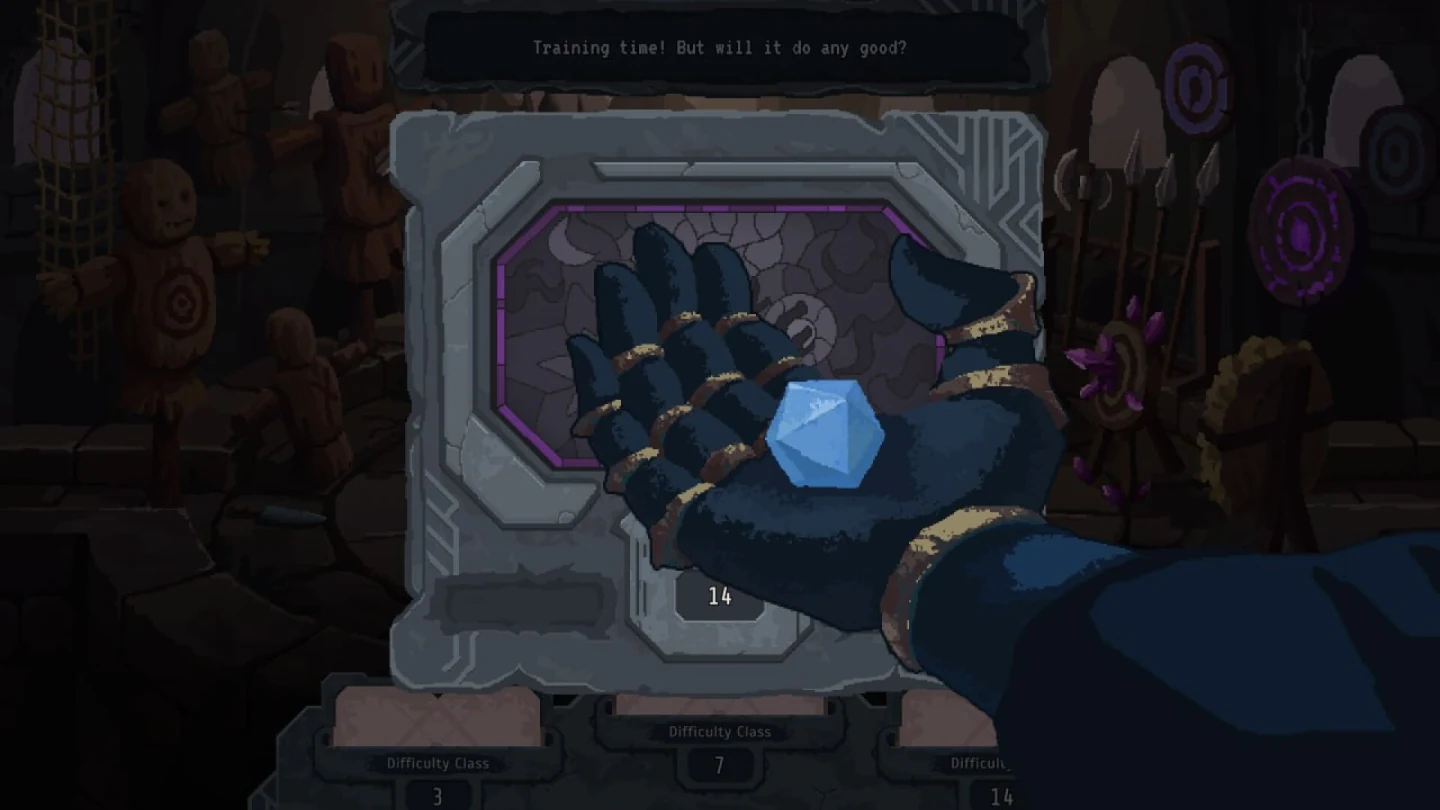
Take the guaranteed common reward when it immediately improves damage, survival, mana use, or grid efficiency. Roll the die when the common item adds no usable value and the current board can survive a miss. Patch 1.1.7 makes this the central reward decision: stability is available on one side, while the gamble offers a chance at a stronger result without promising that the result will fit the build.
Rarity is not the first test. A common item can be the correct choice when its shape completes an aura contact, replaces weak filler, or gives a companion a reliable job. A stronger-looking reward still has low value when it consumes cells needed by the main plan. Judge the whole board after the change, not the item while it is isolated in the reward screen.
Use a four-part value check
First, compare function. Decide whether the common reward advances the damage lane, adds the survival needed for the next threat, supports a companion trigger, or improves resource control. Second, compare shape. Rotate it and identify the exact cells it would occupy. Third, compare contacts. Count only the aura or edge relationships that actually activate, not every item the new piece touches.
Fourth, compare replacement cost. Name the equipped item that must leave and every connection that disappears with it. The guaranteed item is valuable only when the resulting board is better. This check prevents a common mistake: taking a nominal upgrade, dismantling a coherent layout, and discovering that the run lost more from broken positioning than it gained from the reward.
| Question | Take the common item when | Roll when |
|---|---|---|
| Function | It fixes a current weakness | It repeats a role already covered |
| Shape | It fits without damaging the core | It creates unusable gaps or congestion |
| Contacts | It activates a useful relationship | It breaks more value than it creates |
| Timing | The next encounter demands the upgrade | The board is already stable |
Change the threshold with the route state
Early in a run, flexibility has high value. Take a useful common item when it establishes a damage lane or gives an empty companion grid a dependable function. Once the layout has several important contacts, the threshold rises. A new item must outperform both the equipped piece and the positioning work needed to install it. The gamble becomes more attractive when the offered common item cannot clear that higher threshold.
Before an elite or boss, immediate value matters more than theoretical ceiling. Take a modest improvement that protects the party or completes the current plan. After the party is stable and has resources available, the same offer can be skipped for a roll. The decision changes because the cost of failure changes, not because the common item changed color or category.
- Fragile run: favor an item that works immediately.
- Stable run: reject filler and roll for meaningful improvement.
- Crowded grid: demand a clear gain after all broken contacts are counted.
- Open companion grid: value compact role-defining items more highly.
Avoid the three bad gambles
Do not roll because the offered item is common. Roll because it fails a concrete board test. Do not roll while a known weakness is about to end the run; a small guaranteed fix has more value than an upgrade that never arrives. Do not take the guaranteed item only to store it as unused clutter. Every occupied cell has an opportunity cost, especially when later shapes need room to rotate.
Temporary items need a separate timing check. If a tooltip states that the item disappears after a limited number of combats, use its remaining duration against the route segment that justifies the space. A temporary item can make the guaranteed choice correct before a difficult sequence, but it should not force the permanent core apart when ordinary fights already feel controlled.
- Identify the next meaningful threat.
- Name the weakness that threatens the run.
- Install the common item mentally, including every removed piece.
- Take it if the final board answers the threat; otherwise roll from a position of stability.
Review the result without chasing the previous choice
After choosing, commit to the resulting board. If the common item was taken, place it deliberately and confirm that the intended effect activates. If the die was rolled, evaluate the new reward from zero; do not force it into the layout just to justify the gamble. A failed roll is already paid for. Breaking a working build afterward turns one loss of value into two.
Across multiple runs, track decisions by situation rather than by result. A sound roll can produce an unusable item, and a poor roll can get lucky. The repeatable rule is what matters: guaranteed value for an immediate, verified improvement; a gamble when the guaranteed option is dead weight and the run has enough stability to absorb variance.