Let Armor absorb repeatable pressure before Health
Prioritize Armor as the layer that absorbs repeatable combat pressure before damage reaches persistent Health. In the current release, Armor fully replenishes after combat, while lost Health carries forward along the route. That makes Armor the preferred place to receive manageable pressure and Health the resource that determines whether later rooms remain safe. Read both with the next enemy action rather than relying on an invented damage formula.
This priority does not mean low Health can be ignored. Once incoming pressure can pass through remaining Armor and defeat a character, restore Health, prevent the action, or remove the attacker. The practical goal is to use Armor efficiently while keeping Health away from route-ending danger. A renewable layer has value only when it protects the persistent layer underneath it.
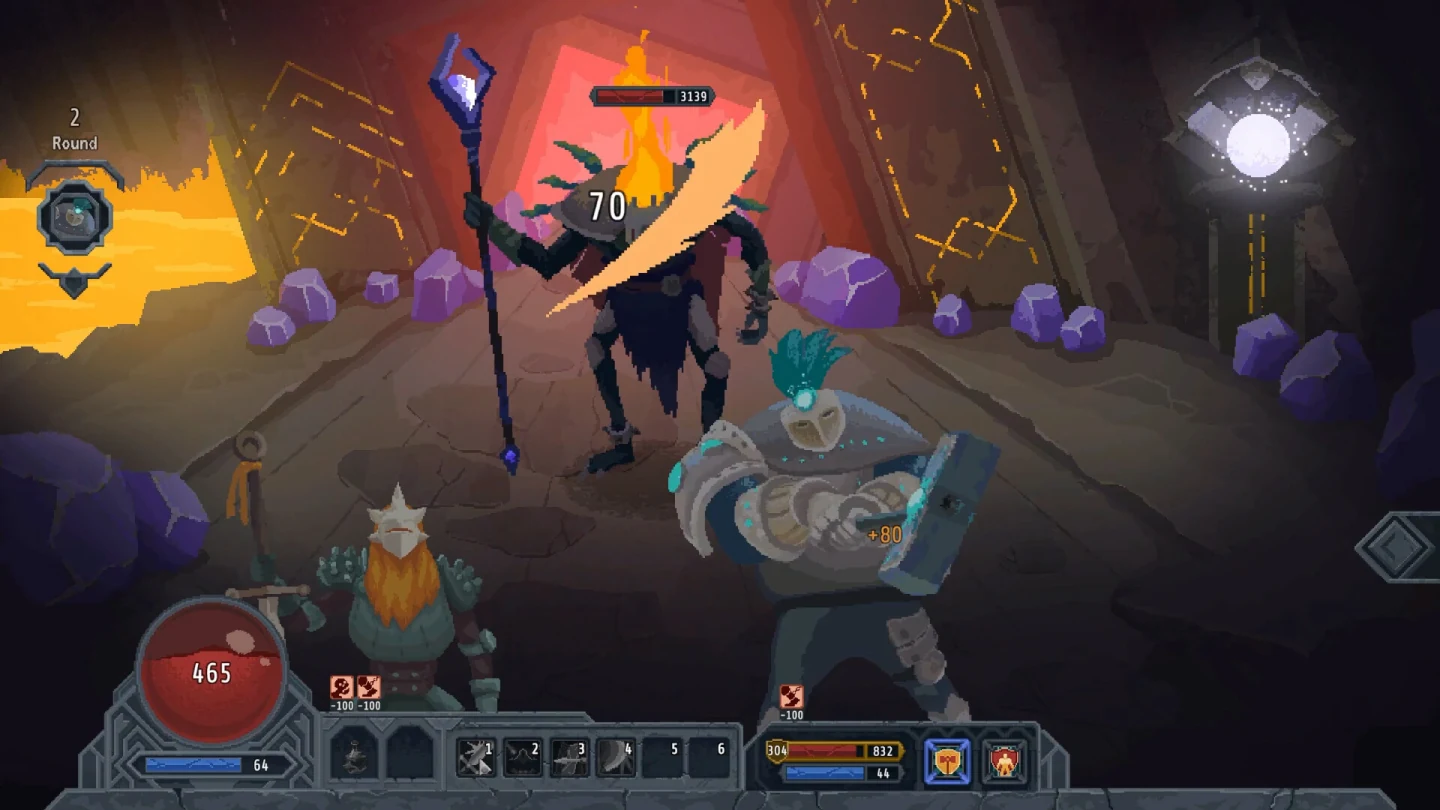
Treat Armor as the renewable combat layer
Armor fully replenishes after combat in the current release, so spending some Armor to win a controlled fight is acceptable. Build enough Armor or protection to cover predictable enemy pressure, then use turn order and target selection to stop the attacks that would break through it. The best Armor plan is not to end every turn untouched; it is to finish the room without converting avoidable pressure into lasting Health loss.
Track which party member is actually being targeted. A companion with strong Armor can absorb an ordinary attack while the hero removes a more dangerous enemy. A low-Armor support character needs protection sooner because losing that role can expose the rest of the party. Renewable does not mean unlimited: once Armor is nearly gone inside a fight, the next actions must be judged against the Health they can reach.
- Allow Armor to cover pressure the party can finish safely.
- Prevent attacks that would break through into persistent Health.
- Protect low-Armor characters whose role keeps the party stable.
- Remember that replenishment occurs after the fight, not during the current danger.
Treat lost Health as route pressure that persists
Lost Health changes more than the current turn because it remains after combat. Every later elite, risky branch, and boss attempt starts with less room for error. When Health falls, compare the nearest campfire, carried health potions, and the encounters between the party and recovery. The correct response can be routing, consumable use, target focus, or a defensive action; the shared purpose is preventing the loss from compounding.
Do not wait for a nearly defeated character before treating Health as important. A moderate loss on the party's only support role can be more dangerous than greater loss on a protected character, because another hit can remove healing or protection for everyone. Evaluate Health by role, enemy targeting, and route length. Persistent pressure is a party problem even when only one bar has fallen.
- Identify which character has lost Health.
- Name the party job that disappears if that character falls.
- Read the next enemy actions and likely targets.
- Check the route distance to a campfire.
- Use recovery or prevention before the loss becomes a defeat.
Choose recovery by the resource that can end the next fight
Restore the resource whose failure can end the next fight. Low Armor calls for immediate protection when an enemy is about to break through. Low Health calls for a potion or a safer route when persistent damage leaves no margin. A threatened companion calls for protecting the role that companion performs, even when another character has the lower-looking bar.
Use the visible turn order to separate urgent recovery from general improvement. If the party can remove the attacker before it acts, damage can be the strongest defensive choice. If the attacker acts first, Armor, Health recovery, a defensive effect, or a disabling action takes priority. Choose by outcome rather than trying to keep every resource equally full at every moment.
| Visible state | Priority | Reason |
|---|---|---|
| Low Armor with incoming pressure | Add protection or prevent the next attack | The renewable layer is about to fail inside this fight |
| Low Health that persists into the route | Use recovery or choose a campfire path | Later rooms begin with reduced survival margin |
| Threatened companion | Protect the companion's party role | Losing damage, survival, or support can collapse the whole plan |
Route to a campfire before persistent damage becomes a death
Choose a campfire branch while the party still has enough strength to reach it. Campfire recovery restores Health, so routing there before another dangerous room protects the persistent resource that combat does not replenish. Compare current Health, the number and type of visible rooms before recovery, and whether an optional elite adds risk the build no longer needs to take.
Spend a health potion on the way when it protects a required role through the remaining encounters. Preserve Armor with target focus and timely defensive actions, knowing it returns after each completed fight. The route decision should reduce cumulative danger: fewer unnecessary threats, clearer consumable use, and a recovery node reached before one weak bar turns into a missing companion.
- Locate the nearest reachable campfire before choosing the branch.
- Count the dangerous rooms between the party and recovery.
- Avoid optional elite pressure when Health is already compromised.
- Use consumables when they keep the party intact long enough to arrive.
Enter a boss with both layers serving a clear job
Before a boss, Health should provide enough persistent survival margin for the plan, while Armor should absorb the repeatable pressure expected during the fight. Check which character receives the first dangerous action, which defensive tool answers it, and which damage sequence shortens later pressure. Entering with full-looking bars is less useful than entering with a clear order for protecting them.
Keep recovery tools connected to specific failure points. A health potion protects the character whose loss ends the plan. A defensive ability preserves Armor before a heavy sequence. Immediate damage removes the enemy action that would reach Health. After each turn, read both layers again and update the order. Health and Armor work together when one preserves the route and the other handles the fight in front of it.