Revive defeated companions at the next campfire
In the current version of Lootbound, campfires restore lost Health and revive defeated companions. Keep the run alive long enough to reach that node, then use the stop to recover the party and return the missing member. The campfire is the revive location; there is no need to search the inventory, Hub, or combat interface for a separate mid-route revive command.
Read the map before leaving the current room. Compare the nearest campfire with the Health and Armor shown for every active character, then choose the branch that can reach recovery without demanding an unnecessary elite fight. The goal is not to chase a fixed healing amount. It is to restore party continuity while preserving enough strength to survive the rooms between the current position and the campfire.
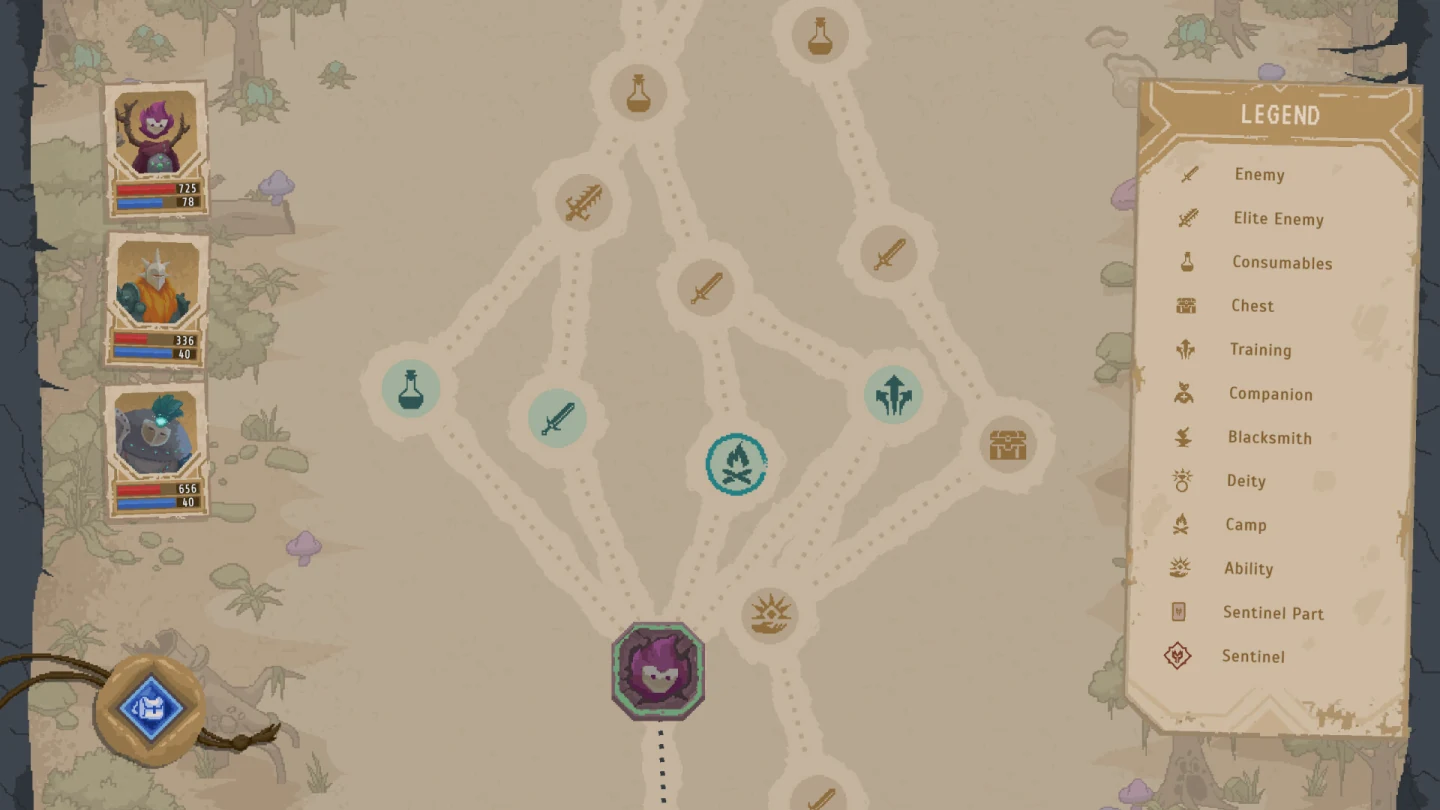
Take recovery before an elite when Health has persisted
Choose the campfire branch before an elite when lost Health has carried forward and the next dangerous room can remove a companion. Armor returns after combat, but missing Health continues to pressure the route. That difference makes the party display more useful than a general rule about always taking rewards or always taking recovery. A stable party can accept risk; a party already carrying Health loss should protect the run first.
Look one room beyond the campfire as well. Recovery has more value when it prepares the party for a required elite, a biome-ending choice, or another stretch with few safe branches. If the party is already healthy and its roles are intact, another route can be reasonable. If one character is close to defeat, the campfire converts a fragile route into a usable one without requiring a speculative reward to solve survival.
- Compare persistent Health loss across the whole party.
- Identify whether the next elite can pressure the weakest companion.
- Prefer recovery when one defeat would remove a necessary combat role.
- Keep the safer branch available until the party is stable again.
Know what the campfire fixes and what it cannot replace
A campfire fixes the immediate continuity problem: it revives a defeated companion and supports route recovery. It does not turn an unfocused build into a coherent one. A weak damage plan still struggles to end fights, a missing survival role still exposes Health, and a cluttered grid still wastes aura contacts after the party leaves the node. Recovery creates another chance to use the build; it does not supply the build's missing logic.
Use the stop as a checkpoint for the next encounter. Confirm which character deals damage, which character absorbs or reduces pressure, and which character supplies healing, buffs, debuffs, or mana support. Then inspect whether each grid actually serves that assignment. When a role is missing, route toward the room that can improve it instead of expecting repeated campfires to compensate for every combat weakness.
| Problem | Campfire result | Next decision |
|---|---|---|
| Defeated companion | Returns the companion to the run | Restore that companion's party job |
| Persistent Health loss | Provides a recovery opportunity | Avoid spending the recovered margin carelessly |
| Missing damage or support role | Does not redesign the build | Choose rewards and rooms for the missing job |
| Poor grid layout | Does not repair aura contacts | Rebuild around the strongest working relationship |
Route differently when one companion is down
When a companion falls, stop routing as though the full party were still present. Avoid optional elite pressure, spend consumables when they prevent another defeat, and choose rooms that preserve Health until the campfire. The surviving characters now cover fewer jobs, so even an ordinary fight can become dangerous if the defeated companion handled Armor, healing, debuffs, or finishing attacks.
Reassign responsibilities temporarily. The main hero can focus targets that would have been handled automatically, while the remaining companion takes the safest version of its normal role. Do not dismantle every grid for a short emergency unless a swap clearly protects the route. Reach recovery with the core layouts intact, revive the missing companion, and then return each character to the job the build was designed to perform.
- Find the nearest reachable campfire on the current branches.
- Remove optional high-risk rooms from the route.
- Protect the Health of the remaining role-critical character.
- Spend a consumable when it prevents a second party loss.
- Restore normal assignments after the companion revives.
Leave the campfire with three combat jobs restored
Before moving on, make sure the party again covers damage, survival, and support. Damage removes threats before they repeat their actions. Survival uses Armor, protection, or other defensive tools to keep persistent Health from falling. Support supplies the healing, mana, buffs, debuffs, or targeting help that makes the first two jobs reliable. The exact character assignment can change, but all three jobs should be visible in the equipped grids.
Finally, compare the restored party with the next room icon. An elite route needs dependable survival and a way to remove its most dangerous target. A longer route needs enough Health protection to avoid returning immediately to crisis. A reward route needs open grid space and a named upgrade goal. Leaving the campfire with those decisions made prevents the revived companion from returning to the same unsupported position that caused the defeat.
- Damage: identify who removes the highest-priority enemy.
- Survival: identify who protects Armor and persistent Health.
- Support: identify who maintains healing, mana, buffs, or debuffs.
- Route: choose the next room that strengthens the weakest of those jobs.