Unlock Merchant first for the most forgiving general-purpose die
Choose the Merchant die first when you want one reliable default for varied checks. Its face mix includes additive help, doubling, and an automatic win result, so it can rescue rolls that miss by a little and can also convert a moderate base result into a successful high target. That flexibility is useful before you know which room or target will decide the run.
Adventurer is the main alternative and can be stronger at particular target values. It becomes attractive when you are comfortable reading the displayed requirement and matching the die to that exact check. There is no single die that dominates every target, but Merchant is the clearest first unlock because its useful faces apply across more ordinary situations.
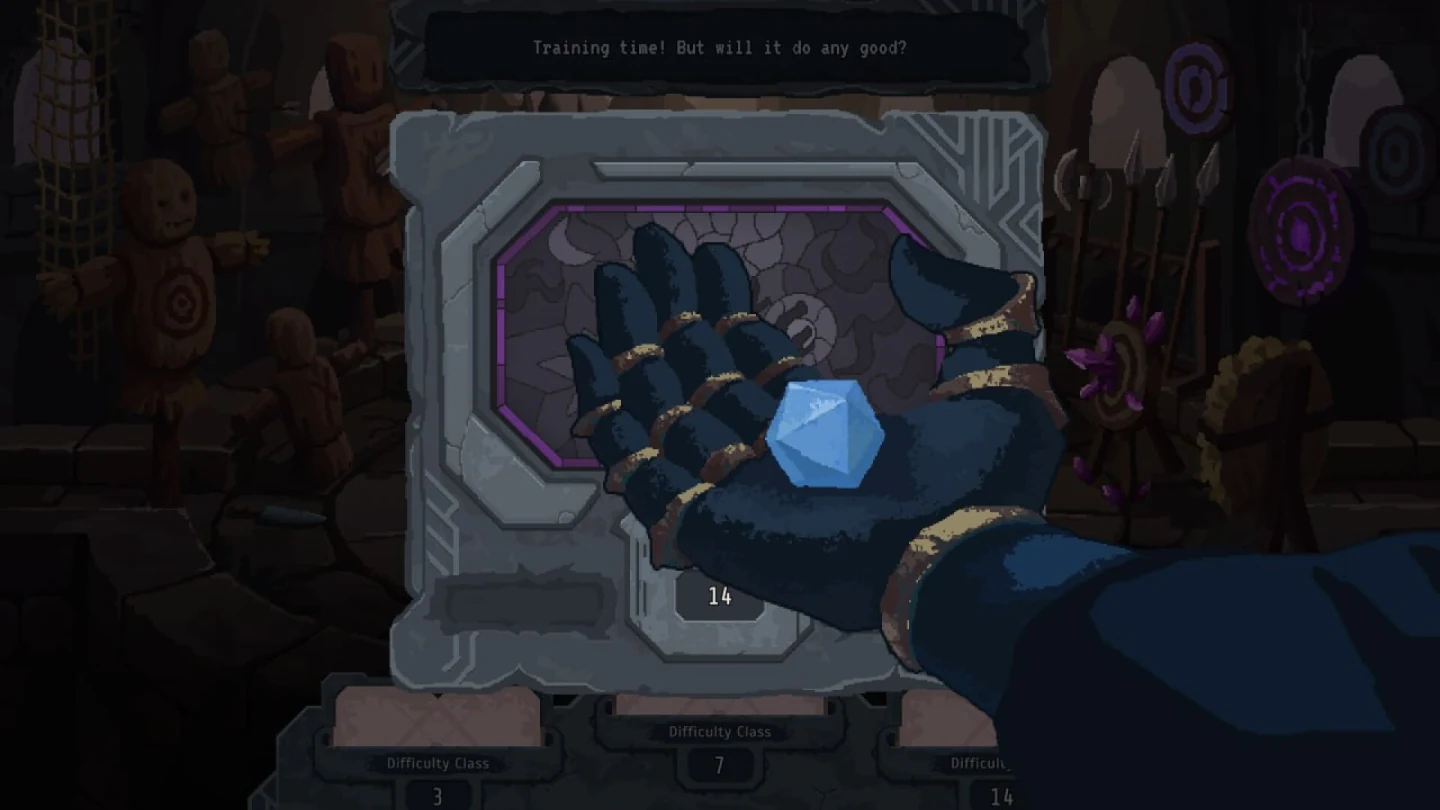
Understand why Merchant works on many checks
Merchant has two faces that add two, three faces that double the rolled value, and one face that wins the check. The additive result helps near misses, the multiplier rewards a solid base roll, and the win face ignores the normal gap. This mix gives the die several ways to matter instead of requiring one narrow setup.
The die does not make every gamble correct. A weak reward remains weak after a successful roll, and a high target can still consume limited help. Use Merchant when the prize fills a real grid, survival, or build need. Take the guaranteed common reward when it solves the problem without spending a die.
| Face result | What it fixes | When it is less useful |
|---|---|---|
| +2 | A small miss | The base roll is far below the target |
| x2 | A moderate roll against a high target | The base roll is very low |
| Win | Any failed target | The reward was not worth pursuing |
Pick Adventurer for target-specific planning
Adventurer deserves attention after Merchant because some target values favor its distribution. Use it when the displayed check aligns with the outcomes it improves and when you can reserve that die for those rooms. It is less comfortable as a blind default because its advantage depends more on the exact requirement in front of you.
Do not replace practical reading with a permanent tier list. Before selecting a die, check the base roll, target, available extra dice, failure cost, and reward fit. If the room already offers a useful guaranteed common item under Patch 1.1.7, the best die decision can be to spend nothing and take certainty.
- Use Merchant as the flexible default.
- Use Adventurer when the visible target favors its outcomes.
- Save specialized dice for checks that match them.
- Skip the gamble when the guaranteed item already fixes the build.
Spend extra dice on run-changing rewards
Before adding a die, state what success changes. Spend for a compact item that completes an aura engine, a survival gain before a boss, or a reward that fills a missing damage lane. Do not spend because the prize is merely rare. A large or mismatched item can win the roll and still weaken the finished grid.
Also price the failure. If missing leaves enough health, mana, and route options to continue, the attempt is affordable. If the run ends without the reward, demand a much stronger success case. Extra dice are a limited correction tool, so preserve them for decisions where the combination of target and payoff is unusually favorable.
- Identify the exact problem the reward solves.
- Check whether the item or bonus fits the current plan.
- Compare the displayed target with the chosen die.
- Confirm the run survives failure.
- Spend only when all four answers support the gamble.
Use a simple unlock order without overinvesting
Buy Merchant first, then add Adventurer when you want a target-specific alternative. After those two, unlock additional dice to cover patterns you repeatedly encounter rather than buying them only to complete the collection. The achievement for buying every die can wait until the core Hub upgrades and reliable run plan are established.
Reassess the active die when the run changes. A die chosen for early reward rooms may not be the best tool for a later high target, and no die compensates for a prize that does not fit. The strongest sequence is a useful reward, a suitable target, and a die whose faces can realistically close the gap.