Prepare for the Guardian assembled from every selected part
The current Steam Store calls the system and final boss the Guardian. Some current in-game UI, including the part-choice screen, labels that same final enemy Sentinel. This guide uses Guardian as the primary term; the names do not identify mechanically different systems.
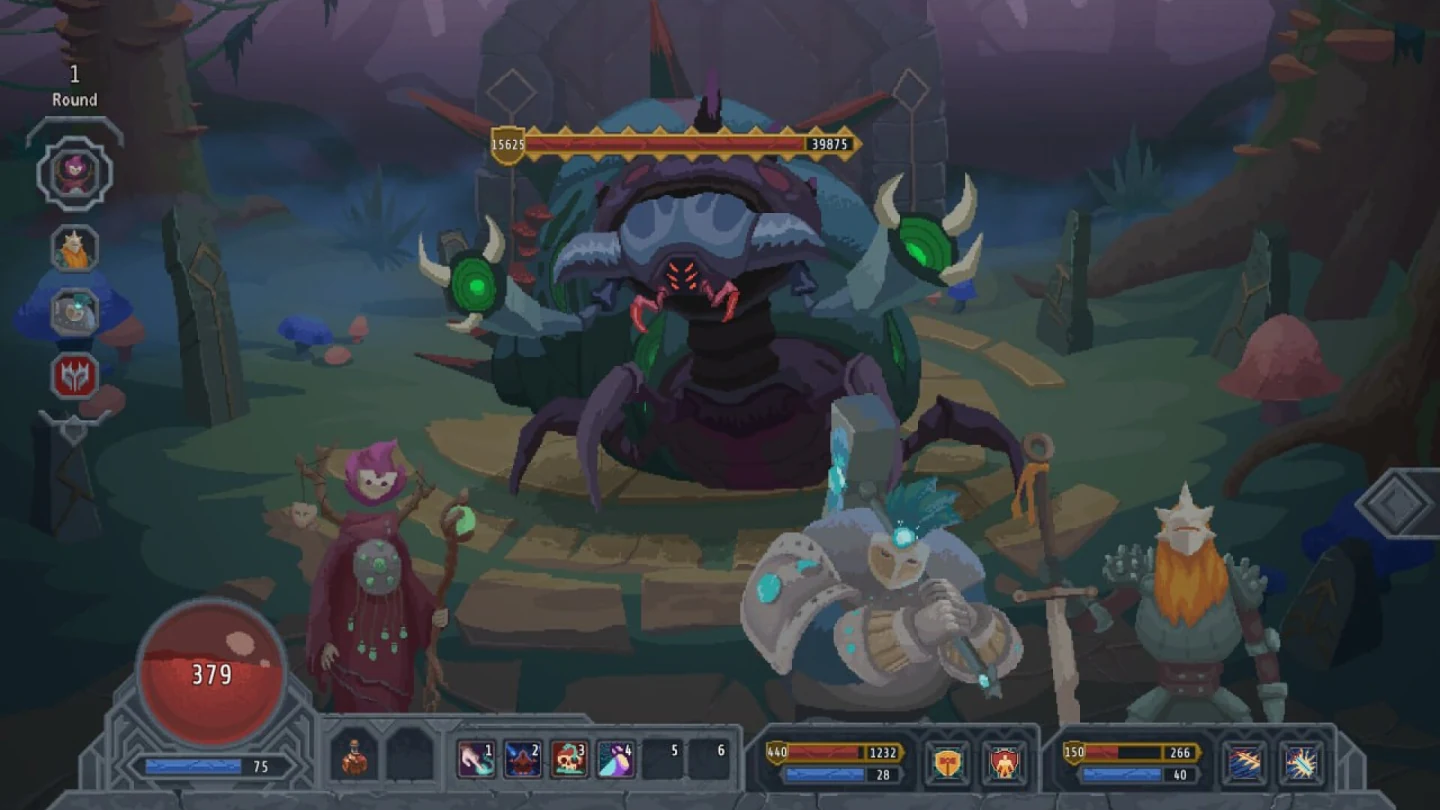
Prepare for the final Guardian before entering its node. Each biome end presents two part options, and all parts selected across biome-end choices contribute to the final boss's appearance and power. Review the complete selection history, then prepare from the party's current weaknesses and the combat information visible when the encounter begins.
A Witch debuff and Corruption direction, fortitude-reduction powder, focused stat lanes, and sustain have all appeared in successful Guardian strategy. Witch is not mandatory. Use the approach already demonstrated by the current run without installing every tactic at the last moment.
Run the final pre-fight audit
Check damage first. Confirm the party can pressure health and has a plan for armor, either through Crush, Acid, or another established opening. Check timing second. The action that starts the build or protects the party must occur before the Guardian's dangerous turn. Check survival third. Every essential companion needs enough durability to perform its role through the setup.
Check resources last. Stop spending in the final ordinary encounters once the route is controlled. Improved recovery helps restore mana, but the final reserve protects the action that cannot be replaced. Remove dead filler and temporary items whose displayed combat timer will not cover the fight.
- Review all Guardian parts selected across biome-end choices.
- Confirm one health-pressure lane and one armor answer.
- Set Initiative around the opening action.
- Protect the companion whose loss breaks the plan.
- Reserve mana for setup, survival, or a decisive removal.
Execute a focused opening
Start by using the build's central effect and preventing the highest-cost visible action. A Witch debuff direction can continue when current gear supports it. A Warrior or Paladin can create reliable pressure while companions handle the missing lane. A Bard can deliver support before the protected actions occur.
Do not spend every resource in the first available window. Use only the mana required to establish control, then preserve the next answer for the visible combat state. Automatic companions perform better when the main hero creates one clear priority. Keep focus aligned until the immediate threat or defense is removed.
| Build state | Opening priority |
|---|---|
| Witch debuff plan | Use the visible debuff direction and protect the party |
| Armor blocks damage | Use Crush, Acid, or the dedicated opener |
| Support plan | Deliver the effect before allies take the key turn |
| Defensive plan | Convert survival into focused useful actions |
| Companion finisher | Create one exposed or low-health target |
Use sustain and mana to preserve the win condition
Sustain matters because the final Guardian can require the party to repeat its loop. Protect the character whose role cannot be replaced and remove the pressure that threatens that role. Defense with no payoff only delays the loss; every protected turn should advance Corruption, armor removal, focused damage, or party support.
Spend mana when it prevents a decisive loss or creates the opening required by the build. Save it when normal actions already maintain control. Recalculate after each major change rather than following a fixed cast order. The current combat state decides which action carries the most value.
- Protect the unique party role.
- Keep damage concentrated on the current priority.
- Use sustain to repeat the win condition.
- Reserve one answer for the next dangerous sequence.
Diagnose the final Guardian loss
If the opening failed, improve Initiative, setup survival, or the first target. If armor stopped all damage, add a dedicated opener without diluting the core. If companions died, protect the essential role or remove the threatening action earlier. If mana disappeared before the decisive phase, reduce ordinary-room spending and unnecessary early casts. If the board could not add the required answer, rebuild around flexible connected cells before the next attempt.
Repeat the same central class plan with one correction. Guardian success comes from a coherent run reaching a prepared final sequence and responding to the encounter state the game actually shows.